Showing posts with label ducks. Show all posts

Monday, February 10, 2020

Peabody Morning: Marching Ducks, High Tea and Memories of Young Elvis


Never turn down an opportunity to spend a morning in Memphis at the venerable Peabody Hotel.

The Good Girls survey the scenery from atop the Peabody Hotel in Memphis. 


Where else can you watch ducks march from the lobby elevator to a fountain, take a tour of the hotel with the elegantly attired Duckmaster, meet the son of Elvis' tailor and enjoy a delicious high tea surrounded by elegance in Chez Philippe, the world's only French Restaurant that has never served duck?


The VIP feeling begins immediately when you walk through the door. Adults take seats at tables in the lobby, while youngsters stay busy talking to the Duckmaster and checking out the “duck pond” where the ducks soon would head.

Dubbed the "South's Grand Hotel," the first Peabody opened in 1869 closing 54 years later. It reopened as a larger, better version in 1925, at its current downtown location.

In the 1930s, the Peabody held one of three locations where CBS radio broadcast live shows, attracting top bands like Tommy Dorsey, Paul Whiteman, Harry James and Les Brown. Between 1945 and 1950, one such program was hosted by young Sam Phillips who later launched Sun Records and the career of Elvis Presley. Elvis connections appear all over Memphis.

The ducks arrived in the 1930s, too. Turtles and young alligators previously had appeared in the fountain, but their tenure was always short. Then, one afternoon in 1933, General Manager Frank Schutt and his pal Chip Barwick returned late from a duck hunting trip in Arkansas. They planned to keep temperatures and spirits high with liberal doses of Tennessee sipping whiskey. In those days, live ducks were used as decoys, so they deposited three small English Call ducks in the lobby fountain.

When morning arrived, the ducks were still happily paddling around, delighting guests and staff. The 85-year tradition of Peabody ducks had begun.

The original Duckmaster Edward Pembroke.
In 1940, Bellman Edward Pembroke, a former circus animal trainer, volunteered to bring the ducks to the fountain each day. He soon had them trained to march in line, enhancing the tradition. Pembroke became the first official Duckmaster and performed the morning and afternoon ritual until his retirement in 1991.


On the morning of our visit,  three female and one male mallard performed perfectly, clearly eager for their daily swim. As the lobby emptied, Duckmaster Kenon, in training to be the seventh to hold that title, began the daily hotel tour.

We learned that the '60s and '70s were not kind to the Peabody and in 1975 it was put up for sale on the courthouse steps. Belz Enterprises stepped in, bought and saved the venerable hostelry, spending $25 million to restore and remodel the Peabody to even greater glory, ducks and all.


After admiring the ceilings and chandeliers, we were led to Lansky Bros, "Clothiers to the King," who moved their famed store into the new Peabody.


Kenon introduced us to Hal, son of Bernard Lansky who befriended young Presley and encouraged him to visit the store any time.

Kenon shows off one of his favorite Elvis jackets, the style he wore for his wedding with a special lining for today's buyers. The checked jacket behind him is like the one Bernard Lansky fitted on Elvis for his appearance on the Ed Sullivan Show.
When Presley was booked onto the Ed Sullivan show in Sept. 9, 1956, he came to Lansky with a problem: he needed something nice to wear but didn't have any money. Bernard fitted him out on credit. Ever loyal, Elvis came to Lansky for clothes from then on, sporting the pink and black outfits Lansky developed for him to his wedding tux.

Hal encouraged us to try on a few things, not that we needed any encouragement.
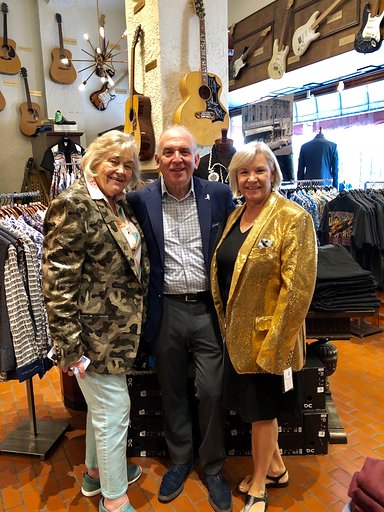
Debi went for sparkle with the gold sequined jacket while Judy opted for a slightly less flashy model.
Other performers relied on Lansky, too, including B.B. King, Isaac Hayes, Carl Perkins, Johnny Cash and Jerry Lee Lewis.

So can you;  a jacket like the one Elvis wore for his wedding with a special lining will set you back $295, a bottle of his cologne $60.

With Elvis fresh on our mind, we toured upstairs, seeing the photo documenting the signing of Elvis' first recording contract with RCA,


the note ordering no dead ducks at the Peabody


and the square grand piano built expressly for Francis Scott Key.
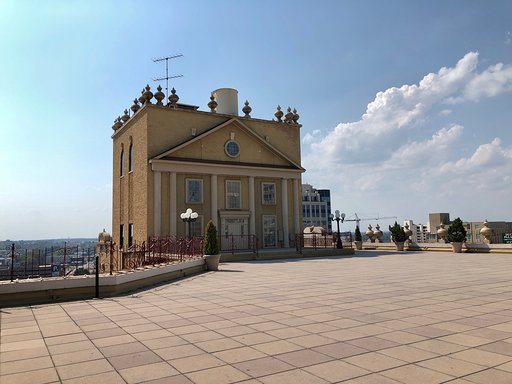
The Duck Palace

Then it was up to the roof to check out the views and the $200,000 Duck Palace.
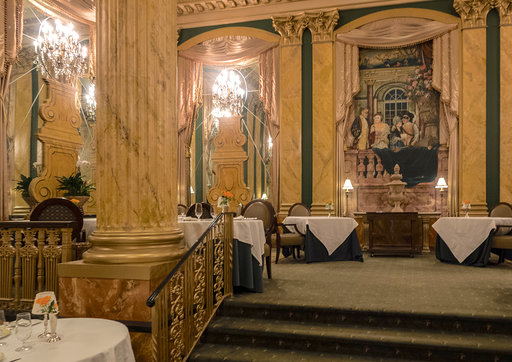

By this time, we had worked up an appetite and were ready for a bit of high tea pampering at Chez Philippe. Elegant is the word for this hushed space, a sigh of refinement in an otherwise bustling world beyond the tables set with Petite Fleur china.


We started with Champagne, then selected from among seven teas and savored our environment. In perfectly timed succession we were served our beverages,

a two-tiered arrangement of savories,

a basket of hot blueberry scones

and a a three-tiered array of sweets.

Delicious, but too much to eat. We left with a box of goodies hoping the maid at the hotel would find them as delicious as we did. Most of all, we left feeling like we were somebody at the Peabody.


Tuesday, May 26, 2015

Galloping along Virgiinia's Eastern Shore

Chincoteague, VA. Photo by Debi Lander.
Rugged men, resourceful women, wild ponies running free and oysters worth slurping occupy the Eastern Shore year 'round. Off-islanders visit when the water warms and the weather is better along this 70-mile-long pointy finger of a peninsula from Kiptopeke in the south to the bottom half of Assateague Island to the north.

You know this peninsula with the longest stretch of undeveloped barrier islands on the East Coast (23) has to be worth visiting when you consider the effort and expense of building and maintaining the Chesapeake Bay Bridge-Tunnel connecting it to the mainland. The 17-mile-long creation is considered one of the seven engineering marvels of the world.

Barrier Island Center. Photo © by Judy Wells.
One road stretches like a spine from end to end of the peninsula, giving residents a simple way to identify their locale: baysider or seasider, up the road or down the road. Our first stop was The Barrier Island Center in Machipongo, an enjoyable way to learn what life on barrier islands was like.

Westerners have been settling here since the 1600s. Early cash crops were salt and wool. The salt came from the ocean and settlers found a cheap and easy way to control sheep for the wool: maroon them on smaller barrier islands where they could forage for themselves. Today the descendents of those 17th century sheep are adding to the historical accuracy of Colonial Williamsburg and Mount Vernon.

By the 1800s rich northerners were flocking to Hog Island for the hunting and fishing.
Hog Island Hotel desk. Photo © by Judy Wells.
 A large part of the center's displays are dedicated to the community of watermen on Hog Island that was washed away and deserted following a storm in the 1930s.

From the Hog Island Hotel front desk and the watermen's boats to locally carved wooden decoys and the annual July Fourth baseball games and the recipes for food to fuel them, displays emphasize personal lifestyles.


The 17th century cook house, left, and what had been the African-American women's housing. Photo © by Judy Wells.
The Center's building comes with its own history having served as the Almshouse Farm since 1803. Machipongo, by the way, is an Indian word meaning place of fine dust and flies. It was windy during our visit which kept the flies down and the thriving grass took care of the fine dust.


If, like Judy, you grew up on Newberry Award-winner Marguerite Henry's books and fell in Love with "Misty of Chincoteague," the Museum of Chincoteague  will be a must stop. The protagonist of that book is stuffed and on display as is Stormy, her third and last foal. So are other mementos of life on Chincoteague, but after the Center you will have seen much of that already. You may leave wishing you had kept going with only Wesley Dennis's illustrations of Misty, but go ahead and stop anyway.


Stormy


Misty
View from the Visitors Center. Photo © by Judy Wells.
We went to the Chincoteague National Wildlife Refuge to look for the real things, the wild ponies that live on Assateague Island. The popular myth is that they were washed ashore from a capsized Spanish galleon, but genetics indicate they were of domestic stock that were put on the islands to escape a livestock tax and turned feral over the centuries.
Chincoteague ponies.
After checking with the National Park Service Visitors Center at Little Toms Cove, we found a threesome in the distance while driving along the Wildlife Loop Road, where we also encountered bird watchers sitting in lawn chairs to watch an eagle's nest.
One very preggnant mare and a Misty look-alike. Photo by Debi Lander.
Denise Bowden,
We heard a lot more about the ponies during dinner at Don's Seafood where we met Denise Bowden, the first woman accepted into the Chincoteague Volunteer Fire Company. The company owns and is allowed to graze the 150 ponies on the Virginia end of Assateague. Some 30-40 ponies live on the Maryland end of Assateague, their numbers controlled by artificial birth control.
Fairgrounds.


Since the early 1940s, said Denise, the Chincoteague firemen have auctioned off young ponies as a way to control the size of the herd and to raise money for equipment. The round up, swim from Assateague to Chincoteague, pony penning, auction and carnival are held the last consecutive Tuesday and Wednesday of July. Preliminaries - rounding up the herds, walking them to the assembly area and checking the ponies for health and destiny - fills Saturday through Tuesday. The swim takes place on Wednesday, the auction on Thursday, Friday the ponies swim back to Assateague and, as Denise says, "Saturday we fall out."

Easily understood when a town of 3,000 hosts 50,000 or more visitors.

Make way for ducks and ducklings.
It's easy to see how Chincoteague has been voted happiest town, best seaside town and other hospitality and lifestyle kudos over the years. Ducks have the right-of-way, locals are surrounded by sea and bay with all of its bounty, the wild things that live or visit are respected and residents live at a pace that fits with tides and ducks.

Kayakers in Assateague Channel.


There is room for all, even the human tourists who flock to their beaches, paddle in their waters, come to observe wildlife, clog restaurants and streets of this half-mile-wide, seven-mile-long island.  Even when visitors push ordinary out-the-door lines at the Island Creamery to a length that anywhere else would engender wait-rage, the locals smile.

Marsh mud, an unbelievably dense chocolate, is worth the wait and they know when the winds blow as cold as the locally made ice cream inside, the island will be theirs again.